

The European Union on Iran - Sidelined by the United States?

By Alexandra Scherrer
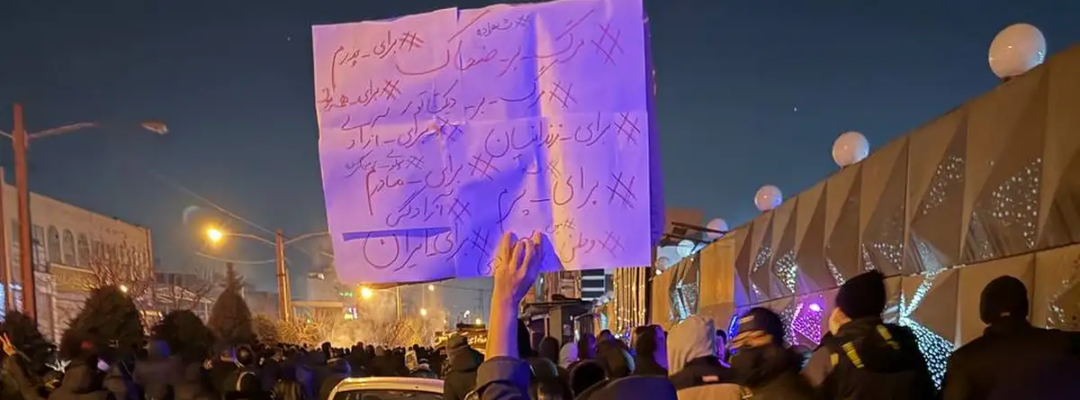
On 14 February, around 250,000 protesters rallied in Munich, which was then hosting the Munich Security Conference, for a demonstration against the current Iranian regime. January had seen nationwide protests in Iran, followed by a violent regime crackdown that included executions, an internet shutdown, and thousands of arrests. The European Parliament strongly condemned the repression of the protests, and the Council of the European Union moved forward with designating the Islamic Revolutionary Guard Corps as a terrorist organisation.
In September of 2025, EU sanctions against the regime had been reimposed through the snapback mechanism of the Joint Comprehensive Plan of Action (JCPoA), the 2015 agreement on Iran’s nuclear capabilities forged between the 5 permanent members of the Security Council, Germany, and Iran. This mechanism, intended to sanction non-compliance with the agreed-upon measures, was accompanied by the reintroduction of UN Security Council sanctions against the country. In an effort to reach a new nuclear deal, the United States and Iran began a new round of negotiations in February. Unlike the previous agreement, these negotiations do not feature any European officials.
Is there a potential US-EU divide over the use of force versus diplomacy in addressing the Iranian security threat?
Both German Defence Minister Boris Pistorius and EU foreign policy chief Katja Kallas had previously argued against an external toppling of the regime in a recent press conference. Instead, they argued this push would have to come from the Iranian people themselves. However, human rights organisations, internet freedom programmes, and civil society work in Iran have already been disrupted by the cutting of USAID programs to the country. The Iranian opposition is fragmented, and with the current crackdown on protests, organised resistance is becoming increasingly difficult.
During the Munich Security Conference, European positions toward the situation in Iran seemed vague, especially given the previous US threats of intervention. Neither Friedrich Merz, nor Keir Starmer, nor Emmanuel Macron addressed Iran at all in their speeches. Roberta Metsola, president of the European Parliament, claimed that the EU and the US were on the same page regarding Iran and assured US Senator Lindsey Graham that ‘you will find full alignment’.
However, Lindsey Graham then declared that he fully supported military regime change, insisting that the US can’t turn back now, after Trump had previously emboldened protesters by declaring that help is on the way. Several news reports suggest that military preparations for a potential intervention are already underway, with potential hold-ups being the current negotiations on a new nuclear deal and fears that Iran will follow the paths of Libya and Iraq regarding post-intervention instability.
The past months have shown that the US does not feel the need to consult the EU before engaging in regime-changing operations. But unlike in the case of Venezuela, an intervention in Iran would not come as a surprise, so the EU should be prepared. In the current negotiations on a nuclear deal and preparations for a possible intervention, the EU has not placed itself at the forefront. But if the US moves forward with an intervention, an active and engaged EU might make all the difference in securing a cleaner transition of power in Iran.
Even if the US decides against an intervention, the EU needs to fill the gaps left by USAID cuts and support civil society, human rights organisations, and internet freedom.
