

Why Europe Needs More Women in Politics
Opinion by Winona Kamphausen
Every March, we celebrate Women’s Month and International Women's Day. We share posts, attend panels, highlight inspiring women and reflect on how far gender equality has come. And yes, progress is real. But celebration alone is not enough anymore.
At a time when extremism is rising, civic space is shrinking, and democratic backsliding is becoming part of Europe’s political vocabulary, women’s political representation should no longer be treated as a ‘nice-to-have’. It is a democratic necessity.
Put simply, you cannot talk about the strength of democracy without talking about the place of women in it.
Progress We Can Celebrate and the Gap We Can’t Ignore
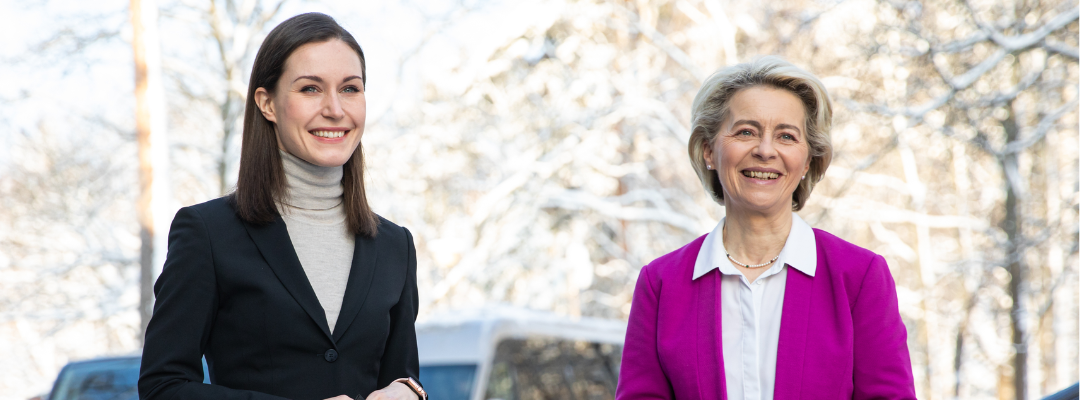
Europe has made visible strides. The Presidents of both the European Commission and the European Parliament are women. In the European Parliament, women now hold around 39% of seats, nearly reaching parity.
But it still means women are not equally represented in the EU’s main democratic institution. And when we zoom out to national parliaments, the picture becomes even more uneven. Some countries are close to gender balance. Others are still stuck with barely a quarter of seats held by women.
These numbers matter. Not because politics should be a numbers game, but because representation tells us who gets to shape decisions and whose voices are missing from the room. Furthermore, research shows that women’s participation in politics is closely linked to broader indicators of democratic quality, including election integrity, civil liberties and checks on executive power. Current research makes one thing clear: the status of women is inseparable from the health of democracy.
Democracy Was Not Built for Everyone
It’s easy to forget how recent women’s political participation actually is. European democracies were built in systems that excluded women from voting, holding office and shaping public life. Women’s integration into political institutions is a key indicator of democratic maturity. Democracies only become fully democratic once historic exclusions are dismantled.
Research shows that where democratic backsliding accelerates, women’s rights are often among the first to be challenged or rolled back. Across Europe, the rise of far-right and populist movements has increasingly included attacks on gender equality as part of broader challenges to liberal democratic norms.
Strengthening women’s representation is therefore not only about fairness. It is a safeguard against democratic erosion.
More Women in Politics Means Better Politics
There’s another reason this matters: when women enter politics, policy priorities shift.
A large comparative study covering 49 European countries found that higher levels of women’s political representation are associated with better health outcomes, lower infant mortality and smaller gender health gaps. These aren’t minor differences; they reflect political systems that respond more effectively to citizens’ needs.
Global research reaches similar conclusions. When more women hold office, parliaments tend to prioritise healthcare, education, social protection and long-term human development. Women legislators are also more likely to work across party lines, a crucial skill in today’s increasingly polarised political landscape.
We already see this in the EU. Women MEPs have played central roles in advancing legislation on equal pay, parental leave, combating gender-based violence and strengthening rule-of-law protections. These policies don’t just benefit women; they broaden who can safely and equally participate in society.
Strong Democracies and Gender Equality Go Hand in Hand
There is a consistent pattern across Europe: countries with strong democratic institutions tend to have stronger gender equality and higher levels of women’s political representation.
Data from the Varieties of Democracy project shows that egalitarian gender attitudes are significantly more common in democratic countries, and that the development of democratic institutions often goes hand-in-hand with women’s rise in public life.
In long-established democracies such as Finland, Sweden and the Netherlands, gender equality is widely seen as part of democratic legitimacy. In newer or less consolidated democracies, electoral systems still play a stronger role; for example, proportional representation systems tend to help more women reach office.
Either way, the message is clear: gender balance doesn’t happen by accident. It happens when political systems and societies decide it matters.
Representation Builds Trust
Europe is facing a growing trust problem. In several member states, voter turnout is declining, and distrust in political institutions is rising.
Research shows that gender-balanced institutions enjoy higher levels of public legitimacy, even when gender balance is achieved through quotas. When citizens see themselves reflected in political institutions, they are more likely to trust and engage with those institutions.
Representation strengthens participation. Participation strengthens democracy.
Europe Should Lead by Example
If the EU wants to present itself as a global champion of democracy and human rights, it must live up to those values at home.
No European political institution has yet reached full gender parity. That doesn’t mean progress hasn’t been made, but it does mean the job isn’t finished.
Women’s political representation should not be treated as a symbolic goal revisited every March. The evidence is clear: gender-equal institutions create stronger democracies, improve societal well-being and help defend against democratic decline.
Equality is not a woman’s issue. It is Europe’s democratic imperative.
