

The German ‘No’ on Involvement in Iran: Continuity or Turning Point?

By Alexandra Scherrer
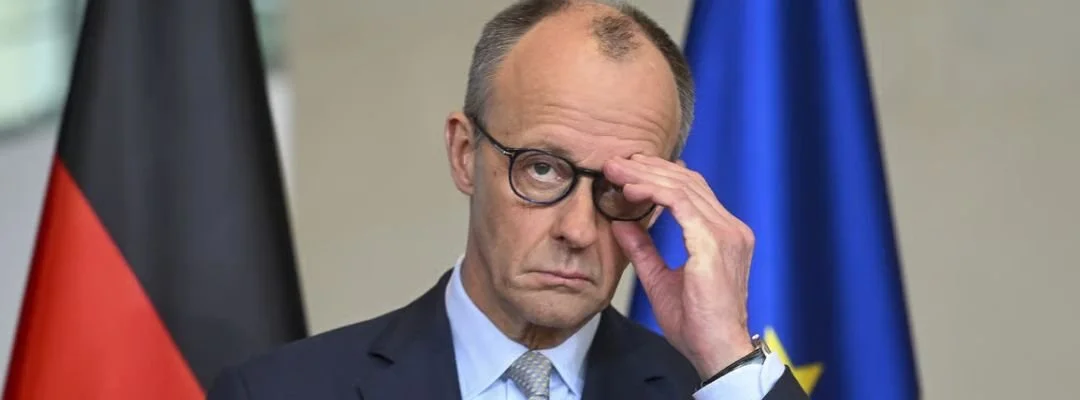
German Chancellor Friedrich Merz has long been criticised for his reluctance to oppose Donald Trump openly. This applies both to the US attack on Venezuela, which Merz never officially condemned, and the Chancellor’s initial reluctance to speak out against the US-Israeli attack on Iran. Last week, a couple of days after the initial strikes, both the Chancellor and Germany’s Foreign Minister, Johannes Wadephul, suddenly found unusually strong words in response to the current US actions in Iran. This shift came only a couple of days after Merz visited the White House, after which he was once again criticised for avoiding open opposition to the US President, especially on Iran.
In his address to the German parliament on Wednesday, 18 March, Merz stated that Germany still has many unanswered questions regarding the war and that he is missing a convincing concept for how the operation is supposed to succeed. He clarified that Washington had not consulted Germany prior to the attacks, and added: ‘We would have advised against taking this path’. By announcing that Germany will not participate in military action, and by noting a lack of mandate and a discrepancy of interests, the German Chancellor has angered Donald Trump.
Hailed—and criticised—as a foreign policy shift, this decision to confront Trump has been much discussed. But is it actually a German foreign policy turnaround? Or is it just a continuation of the foreign intervention approach Germany has followed since reunification? And what are Merz’s possible motives?
Domestically, the Chancellor’s party, the Christian Democratic Union (CDU), is struggling. The party suffered a narrow and unexpected election defeat in the state of Baden-Württemberg, and the polls for the upcoming elections in the neighbouring state of Rhineland-Palatinate indicate yet another thriller on election night. In the national polls, the CDU was overtaken by the far-right Alternative for Germany (AfD) in September and had to concede the top spot for several months until narrowly reclaiming the position in February. Added to this, Friedrich Merz’s approval rating has steadily declined over the last couple of months, and the government currently finds itself confronted with findings indicating that 86–95% of the Sondervermögen, a 500 billion Euro credit authorisation meant to be invested into infrastructure and climate protection, may have been misappropriated.
The opposition to German participation in Iran, however, served as an increasingly rare moment of cross-party unity in the German parliament. All parties present, including the usually contrarian AfD, agreed that German involvement was not necessary. Recent polls also suggest that the majority of Germans see the US-Israeli attack as unjustified.
Another domestic factor facilitating Merz’s refusal of Trump’s request for military involvement in the Strait of Hormuz is the potential impact of a prolonged war in the region on immigration to Germany, since the country has been suggested as the main destination for refugees fleeing from the confrontation. With immigration seen as one of the main drivers of the success of Germany’s far-right party, and a crackdown on immigration as one of Merz’s campaign promises, contributing to further violence would carry political risks.
Despite all these factors, it would be overly simplistic to reduce the sudden, stronger rhetoric only to domestic calculations. Several international factors have been noted, such as trying not to divert financial, political, and military attention away from Ukraine, reacting to the escalating situation in the region, and presenting a unified European position. Worthy of further consideration is also the aspect of German foreign policy continuity. After all, the German ‘no’ to American-led interventions in the Middle East and North Africa region has a long history. Constitutional and political limits dictate that Germany does not participate without a clear mandate—with the one important exception of the NATO airstrikes against Kosovo in 1999—and the recent past of transatlantic relations shows many examples of this.
The period shortly after German reunification saw the rise of Germany’s checkbook diplomacy, during which Germany contributed financially, but not militarily, to the Gulf War in 1991, even though there was a clear UN mandate. Following this, the perhaps most famous instance of disagreement on military intervention was the 2002 and 2003 debate on whether Germany would participate in the Iraq War. Back then, similarly, the German Chancellor Gerhard Schröder may have been swayed in part by domestic calculations, such as the upcoming federal elections and widespread public opposition to the war, to deny requests for German participation. However, a foreign policy parallel seems to loom even larger when comparing the ‘official’ reasons given for the German ‘no’, both in 2003 and in 2026. In his government address, Friedrich Merz cited a lack of prior consultation with Germany, confusion about the goals of the war, as well as its length and scope, all while reminding listeners extensively of the meaning of ‘partnership’ and what it should entail. All too similar to the German criticism during the 2003 debate, which consisted of the opaque reasons given for war and a lack of eye-level consultation, these parallels suggest that the German-American relations have not moved forward, and that the US seems not to have learned from the mistakes made during the lead-up to the Iraq War (and, as is becoming increasingly more evident, during the war itself), when it comes to convincing its allies.
Just like in the intervention in Libya in 2011, where Germany also refused military participation, significant tactical support remained nonetheless, be that to the use of the Ramstein airbase, the military hospital in Landstuhl, or assistance in negotiating and post-war rebuilding and stabilisation. Merz and Wadephul have made similar offers now, proposing diplomatic assistance—but only once the war itself is over. The use of military bases in Germany has been questioned by Iran, with the Iranian ambassador to Germany requesting an official elaboration of the role of the bases in the current American warfare. These contributions must not be disregarded, as they reveal that the German opposition is not a full blockade for American plans. Similarly, it is also worth noting that while the German government has criticised the American procedure, there is yet to be a government condemnation for the violation of international law, a state of affairs that has been denounced by many German international law scholars.
It is undeniable that there has been a change in tone when it comes to the German Chancellor’s words directed to Trump. But this new German stance has many domestic and international motivators that have little to do with the US President. The current German approach is also broadly in line with the last thirty years of German foreign intervention history. This means that Germany has historically required a clear mandate and has shown that they are not afraid to question US motivations for war and the tactics by which US military goals are to be achieved. While Merz has taken a stand with Iran, it remains to be seen if this attitude of confrontation will be carried on to other issues as well.
