

Knocking on the EU’s doors: Lights and Shadows of Future Enlargement

By Gloria Aleotti
Is the EU family getting bigger? The current debate in Brussels increasingly suggests that it is, though not in the immediate future. Enlargement is a long and torturous process that involves multiple rounds of negotiation and, most importantly, requires unanimity. And it is no secret that in recent years, some EU member states have been less willing to fall in line. Thus, for now, there is no certainty about who will eventually get a seat at the table. Or when.
A Renewed Push for EU Enlargement
Since the accession of Croatia in 2013, the engine of EU enlargement has stalled. Negotiations with some candidate countries continued, while with others they came to a standstill, without any significant progress. At least until Russia launched a full-scale invasion of Ukraine on 24 February 2022. The events that followed resulted in a shift in EU countries’ attitudes towards enlargement. In this unstable geopolitical context, the prospect of EU membership for Georgia, Moldova and Ukraine has been seen as a strategic move to prevent a geopolitical vacuum on Europe’s doorstep. This renewed push for enlargement has also breathed new life into the long-stalled accession process in the Western Balkans, after years of little to no progress. Even Iceland has reignited its own EU ambitions, in part fuelled by alarm over Donald Trump’s repeated threats to take over Greenland.
The Mechanics of EU Enlargement
The European Union family currently counts 27 member states. Any country hoping to join the team must prepare to implement EU policies and legislation, and meet certain accession criteria (the so-called ‘Copenhagen Criteria’). These require having stable institutions able to guarantee democracy, the rule of law, human rights and respect and protection of minorities, a functioning market economy and the ability to assume the ‘obligations of membership’, such as effectively implementing the rules, standards and policies that make up the constantly evolving body of EU law, known as the acquis.
The process is extremely long. Negotiations are divided into 35 negotiating chapters, grouped under 6 thematic clusters. Moreover, negotiations on each cluster open as a whole, but only after the country fulfils the opening benchmarks. Each chapter is then handled individually, with progress assessed before any provisional closure. This is further complicated by EU rules, as, according to EU Treaties, the accession of new member states is subject to unanimity voting, which means that all existing members have to agree. Hungary’s veto on Ukraine’s accession offers a perfect example of why this system is struggling to deliver as intended.
In today’s world, marked by an increasingly uncertain geopolitical situation and fragile alliances, the EU must remain united, and new members could contribute to tipping the balance in its favour. But events are unfolding quickly, and they demand an equally fast response.
Every year, the European Commission adopts its enlargement package, a strategic roadmap for EU enlargement policy, accompanied by a set of reports tracking the progress made by candidate countries and potential candidates. The 2025 Enlargement Package, published on November 4, included, for the first time, tentative deadlines for concluding negotiations for four countries: Montenegro by the end of 2026, Albania in 2027, Moldova in early 2028, and Ukraine in 2028. This new timeline is just one of the steps the EU is taking to speed up negotiations and respond to pressing challenges. Unsurprisingly, not everyone is on the same page.
Scepticism and Divisions
According to a recent Eurobarometer survey, 56% of EU citizens are in favour of further EU enlargement. A majority also believes that their country would benefit from future enlargement, with the most widely recognised advantages being stronger EU influence in the world, a larger market for EU businesses, more work opportunities and more solidarity between countries. Yet, doubts and divisions persist.
Despite the continuing war in Ukraine, Russia’s intensifying hybrid war against the EU and the weakening of the United States security guarantees, the politics of EU enlargement risks becoming hostage to domestic politics in some member states, as unanimity in decision-making can easily translate into vetoes. Hungary offers a great example. With elections around the corner and Orbán falling behind in the polls, Budapest has more than once tried to sabotage various forms of EU aid to Ukraine. It is also holding up the start of talks with Ukraine on parts of the EU acquis to do with fundamental rights and institutional issues, the internal market and external relations.
In 2026, parliamentary elections in Hungary, Slovenia, Latvia, Sweden and Bulgaria could reshape the composition of the Council. In each of these campaigns, security concerns and the economic costs of enlargement are likely to feature prominently on the political agenda, potentially fuelling polarisation and slowing the process further. Without shared milestones for 2026, political headlines from European Council meetings risk overshadowing the actual implementation of enlargement.
There’s more. Experts also insist on the fact that the EU itself needs to undergo internal reforms if it wants to welcome Kyiv as well as other aspirant members. Decision-making in the bloc is already slow and often held hostage by individual member states’ interests. Bringing in more countries could make the system even harder to manage. Moreover, enlargement would also require a major budgetary overhaul, the struggle ahead mirrored in the debate around the 2028-2034 Multi-Annual Financial Framework. Without clearer answers on how the costs would be shared, it is unlikely that national capitals will support a faster path to membership for candidate countries.
Nonetheless, it is clear that, in today’s world, EU enlargement is not just an option. Kaja Kallas, High Representative for Foreign Affairs and Security Policy and Vice-President of the European Commission, highlighted that enlargement must ‘remain merit-based’ but she also stressed that it represents ‘the antidote to Russian imperialism’. Thus, enlargement is a geopolitical choice. One that would determine the kind of Europe the Union wants to become. And the stakes could hardly be higher.
Rethinking the Enlargement Process: A Faster Road to EU Membership
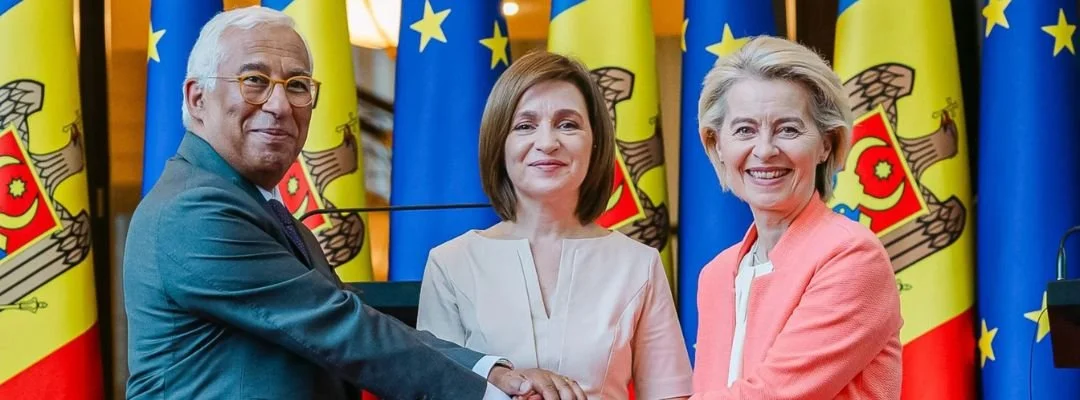
The EU needs to move fast. In order for the bloc to be able to meet enlargement deadlines, two proposals have emerged to limit the risk of veto abuse in the enlargement process. The first, associated with European Council President Antonio Costa, would allow decisions to open negotiations on different parts of the acquis to be taken by qualified majority voting, while the final closure of negotiations would still require unanimity. The idea aims to strike a balance between efficiency and member states’ prerogatives. However, the legal path to such a reform is far from straightforward, as treaty clauses that allow unanimity to be bypassed do not apply to enlargement decisions.
A second, more controversial proposal would allow new members to join the EU without full voting rights, preventing them from vetoing decisions in the same way as existing member states, with the aim of reassuring enlargement-sceptical countries. Yet the approach raises significant concerns. It would not necessarily prevent current members from abusing their veto power and could create a ‘two-tier’membership structure, potentially for many years. Moreover, it risks appearing unfair, as it would effectively penalise future members for the behaviour of existing ones.
Thus, a faster solution is needed, but it is not without risks. EU Treaties set out how countries can become members, yet they offer little guidance on what happens when negotiations reach a stalemate because of the political or strategic interests of individual member states. In practice, this leaves the enlargement process caught between political urgency and institutional limits. The EU may need to move faster, but its own rules make that difficult to achieve.
A Bigger, Stronger and More United EU to Face an Unstable World
The EU project has no historical precedents. Born on the ashes of two world wars that had devastated the continent, it was based on the idea that unity was the best way to prevent history from repeating itself. Since then, the European Union has grown more complex, expanded into new policy areas and attracted many new members to join the original family. But its founding principles have remained the same.
Unity remains the Union’s greatest source of stability. It is common knowledge that democracy brings with it the necessity to negotiate compromise. But this should not undermine the unity that allows the EU to have a voice in today’s volatile and increasingly polarised international system, where influence often seems to belong to those who can demonstrate the greatest strength.
In this context, maybe welcoming new members may not provide an immediate solution to the many challenges Brussels faces today. But for sure, it is a step in the right direction.
