

Tensions in the Western Balkans: Headache for the EU
By Marco Dore
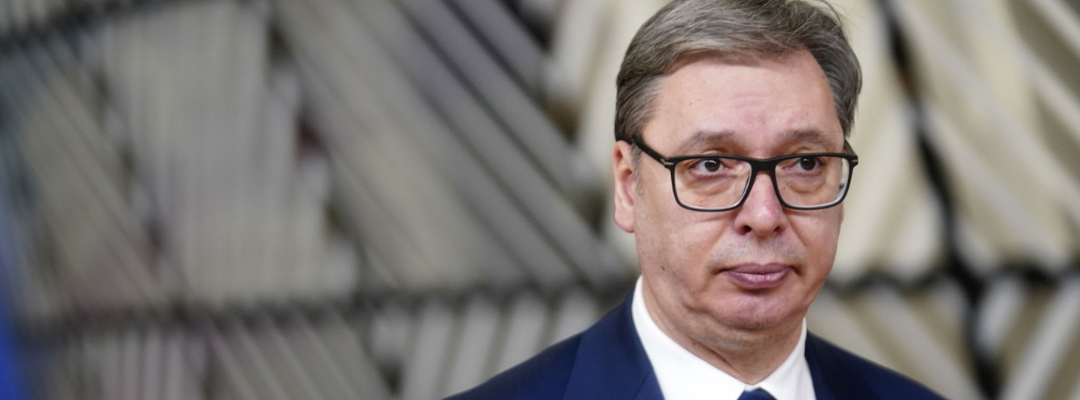
Amid a popularity crisis, the loss of his Hungarian ally Viktor Orban, and ongoing student protests, Serbian leader Aleksandar Vučić finds time to increase tensions with its neighbours, Croatia, Albania, and the unrecognised state of Kosovo. Vučić, a former Minister of Information in Slobodan Milosevic’s regime, criticised a new security alliance among these three countries, portraying it as anti-Serbian.
The joint declaration between the ministries of defence of these states is defined by four key points: addressing cooperation in the military-industrial sector; joint training of personnel; countering hybrid and cyber threats; and promoting Euro-Atlantic integration. Tensions between the Western Balkan states, rising from long-time historical grievances, resurfaced violently during the breakup of Yugoslavia, morphing into today’s situation, defined by a slow process of normalisation between the different governments in the region, paired with occasional spikes regarding historical, ethnic, and border issues, often during election periods.
However, this time things seem to be a bit different. The declarations of Vučić and the trilateral defence agreement do not exist in a vacuum, but are rather part of a longer arms race dating back at least to 2023, when Serbia, an officially neutral state, ramped up military imports from France, Russia, China, and other suppliers, reaching 419 million USD in value. It was a fast military build-up, considering how in the previous year Serbia’s arms imports amounted to 164 million USD, more than doubling its spending. Furthermore, this year, the Serbian leadership has admitted to acquiring Chinese CM-400AKG supersonic missiles and building up its capacities for the carrying and delivery of these weapons, alarming Croatia and NATO as a consequence.
The tensions and declarations from Vučić seem to be an attempt to distract the population from the issues of systemic corruption that the government faces, with ongoing protests and upheaval, mostly led by students, in the aftermath of the Novi Sad train station collapse. The incident caused the death of 16 people and uncovered the deep corruption links between the state administration and the private sector, resulting in widespread disapproval of the leading Serbian Progressive Party and its whole entourage. The government is responding to protesters with police brutality, disproportionate violence, and deception about the Novi Sad incident.
The Serbian direction of its foreign relations has been prompted not only by an overall appeal to nationalist sentiments, but also by widespread discontent with the process of accession to the European Union. In fact, as of March 2012, the country was granted access to candidate status for entering the group. However, the expansion fatigue in the Union and obstructionist vetoes from other states have enhanced a strong feeling of disenfranchisement towards the EU by the Serbian population. A sentiment that the Serbian Progressive Party has capitalised on from its electorate, while finding different international allies that could substitute the EU.
This policy pushed Belgrade closer to Russia and China, and prompted the creation of an unlikely alliance between Viktor Orban’s regime and Belgrade. However, it looks like those alliances have fallen into irrelevance relatively quickly. The Russian entanglement in Ukraine has been eroding Putin’s influence internationally, eroding Moscow’s military, economic, political, and diplomatic resources, leaving Serbia with limited support. The Fidesz regime in Hungary has been democratically overthrown in the recent election by Peter Magyar and its Tisza party, leaving Belgrade ever more isolated. Even the Serbian nationalist leadership of the Bosnian Republika Srpska, Milorad Dodik, has been removed from power following a violation of the 1995 Dayton Agreements, leaving Serbia more isolated even from its closest partners.
It seems that Vučić, through the framing of the Trilateral Accord between Croatia and its partners, seems to be making a last-ditch effort to regain some internal popularity, galvanising the most extreme factions of Serbian politics, and recalling the sentiments of the 1991 conflict. The consequences of another conflict in the region would be highly problematic for the EU, as Croatia is a member of the Union and of NATO. The opening of another front at Europe’s doors would mean splitting efforts and aid between Ukraine and the Western Balkans, diminishing its already weak capabilities.
Furthermore, Brussels must address the disputes between Zagreb and Belgrade to ensure regional stability. The unanimity rules in the expansion process have given Croatia an upper hand, as seen in 2016, when it blocked the opening of Chapter 23 in Serbia’s EU accession talks. Croatia also must address its unresolved issue with war criminals from the war of independence; many remain to be brought to justice. Brussels has often avoided intervening in these difficult issues, leaving individual governments to act and exerting little pressure, especially after the arrest of Slobodan Praljak. The EU must act quickly to prevent escalation and take swift diplomatic action in the Balkans to avoid another conflict in its southeastern region.
