

Is Greenland really part of the EU?
By Maria Rogano
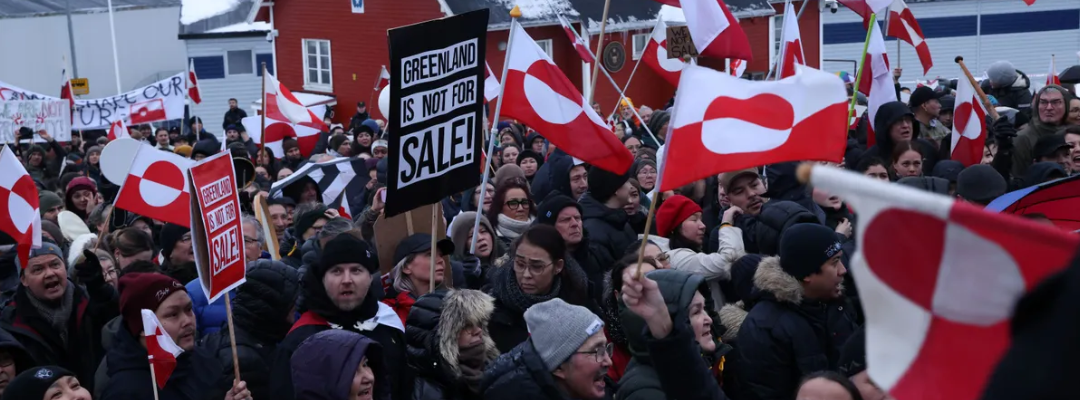
After the imperialistic proposals Trump advanced over Greenland, it is time to discover if the biggest island in the World is actually part of Denmark and the EU, or if there are‘no written documents’ as Trump said.
As you can imagine, he is wrong. There are written documents and court rulings establishing Denmark’s claim to Greenland and, more importantly, a declaration by the U.S. Secretary of State in 1916 which explicitly recognised Danish control over the territory.
From this link, it is possible to ascertain Denmark’s sovereignty over Greenland.
Ever more interesting is the legal position of Greenland in the Union Law framework.
According to the treaty on the Functioning of the European Union, the territory is seen as an ‘Overseas Country and Territory’ (OCT).
Initially, as a Danish Island, Greenland joined the then European Community in 1973, but after gaining autonomy in 1979, with the introduction of home rule within the Kingdom of Denmark, the island made the decision to leave in 1982, which happened in 1985; from this moment, Greenland became an OCT. For the purpose of this article, home rule is the government of a colony or dependent country by its own people. It is a form of decentralisation, which allows a part of a state to exercise its power according to its administrative area.
But why this choice?
Greenland did not agree with the so-called Common Fisheries Policy and wanted to retain control over its own fisheries. Indeed, the Common Fisheries Policy (CFP) is an exclusive competence of the EU through which quotas are given to Member States in order to catch each type of fish, as well as encouraging fishing industries. Moreover, alongside this ‘exception’, in 2009 the EU banned seal products for animal welfare with the aim of prohibiting the importation and the placing on the European Market of seal products, but excluded from this ban both the Inuit community (from Greenland) and indigenous communities as those from Canada, to preserve their way of living.
But what does it mean to be an OCT?
Greenland is economically integrated with the European market via an association agreement, and it is also within the EU’s common external tariff. And, more importantly, even if the EU law does not apply to it, Greenland nationals have EU citizenship.
According to the Treaties, OCT nationals may be granted the right to vote for and participate in elections of the European Parliament.
In 2000, Greenland joined the Association of the Overseas Countries and Territories of the European Union (OCTA); its purpose is to improve economic development in overseas countries and cooperation with the European Union.
These depressing Trump declarations have given us the chance to delve into some peculiarities of the EU and its special territories. Even if not formally part of the EU, notwithstanding its ties with Greenland, its people are Europeans; so every attack contrary to international law against them is an attack on Europe.
