

Finland’s Defence and the Arctic: Security at Europe’s Northern Edge

By Winona Kamphausen
Finland’s defence strategy has always been influenced by its location and its powerful eastern neighbour. Sharing a 1,340‑kilometre border with Russia and situated in the Arctic region, Finland sees defence not simply as a military task but as a national responsibility supported by society as a whole. Its recent NATO membership and sharper Arctic focus reflect how Finland continues to adapt in a fast‑changing security environment.
Lessons from a difficult history
Finland’s strategic outlook has long been shaped by its experience with Russia. After declaring independence from the Russian Empire in 1917, Finland fought two major conflicts with the Soviet Union: the Winter War of 1939–1940 and the Continuation War of 1941–1944. These wars forced Finland to cede territory but ultimately preserved its independence. The conflicts left a lasting imprint, reinforcing the national belief that credible defence capabilities were essential to survival.
Following the Second World War, Finland avoided absorption into the Soviet sphere through a careful foreign policy strategy anchored in the 1948 Finno–Soviet Treaty. The treaty required Finland to resist attacks through its territory but allowed it to remain democratic and market-oriented. This approach, later labelled ‘Finlandisation,’ reflected Finland’s determination to protect its sovereignty while managing a complicated relationship with its powerful neighbour and adopting a policy of neutrality.
A Comprehensive Defence Model
Finland’s defence has long been built on a ‘whole‑of‑society’ model that integrates the military, government agencies, the private sector, and citizens. According to Ethik und Militär’s analysis, Finland kept conscription and territorial defence even after the Cold War, ensuring it can rapidly mobilise a large trained reserve.
This model includes civil defence shelters, crisis planning, and close coordination between state and private actors. Because public trust in institutions is high, this system works not only for defence but also contributes to social stability.
NATO Membership and a New Security Landscape
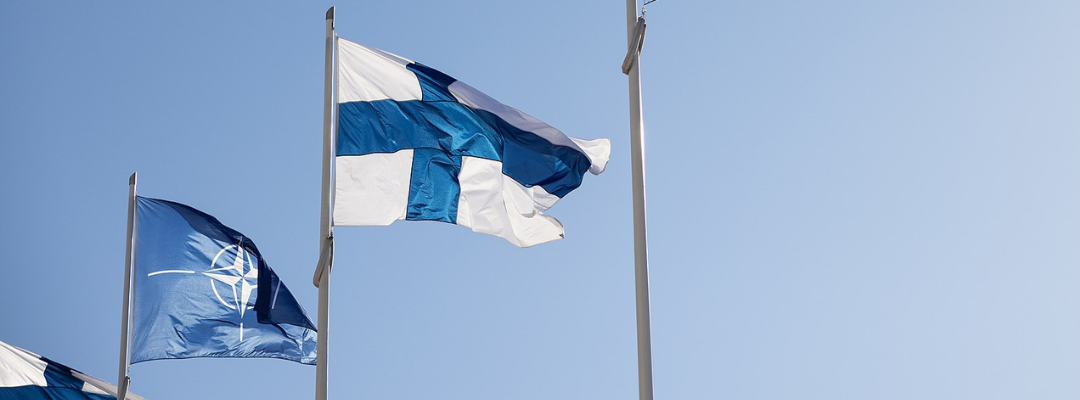
The turning point came after Russia’s full-scale invasion of Ukraine in 2022. Public support for NATO surged, and Finland formally joined the Alliance in April 2023. Finland brings real capabilities to NATO, especially cold‑weather expertise and a large reserve that strengthens deterrence. Finland’s approach aligns closely with NATO’s priorities in northern Europe, where deterrence, resilience, and readiness are central.
The Arctic: A Strategic Priority
The Arctic has shifted from being a mostly cooperative region to a strategic priority for Finland. The Ministry for Foreign Affairs’ Arctic Foreign and Security Policy (2025) describes the region as an evolving security environment shaped by climate change, new infrastructure, energy interests, and heightened geopolitical tension.
As Arctic sea routes gradually open, Finland sees both opportunity and vulnerability. The policy document emphasises that infrastructure, from ports and roads to digital networks, will become increasingly important as northern connectivity grows. This includes dual‑use structures that support both civilian services and military mobility.
According to Foreign Minister Elina Valtonen, Finland aims to be a ‘trusted Arctic actor’ committed to stability, international law, and pragmatic cooperation. Her position stresses that Finland’s Arctic expertise comes from decades of operating in extreme conditions, managing sparsely populated areas, and developing cold‑weather technologies.
Independent analyses reinforce this. Finland’s strong winter‑operations capability, Arctic research, and dual‑use infrastructure, such as ice‑capable logistics and communications systems.
Finland’s Arctic policy also extends into multilateral cooperation. A 2026 joint declaration by eight European states underscores shared priorities: deterrence, resilience, and the protection of critical infrastructure in the High North.
Together, these elements show that Finland views the Arctic not as a standalone region, but as an essential part of its national security and European cooperation.
Current Defence Trends and Deterrence
Security concerns in northern Europe are shaping new decisions. Reuters reported in January 2026 that Finland plans to acquire anti‑personnel landmines and begin training personnel in their use, a significant change driven by territorial defence needs. Finland also continues to support Ukraine with defence materiel, emphasising that European security is interconnected.
Security Actor at Europe’s Northern Edge
Finland’s security posture is the product of historical experience, societal resilience, and a pragmatic understanding of its geography. Its NATO membership strengthens its alliances, while its Arctic expertise positions it as a leading voice in a transforming High North. In a European security environment marked by uncertainty, Finland stands out as a state that has prepared early, adapted quickly, and remained committed to stability both at home and in the Arctic.
