


By Winona Kamphausen
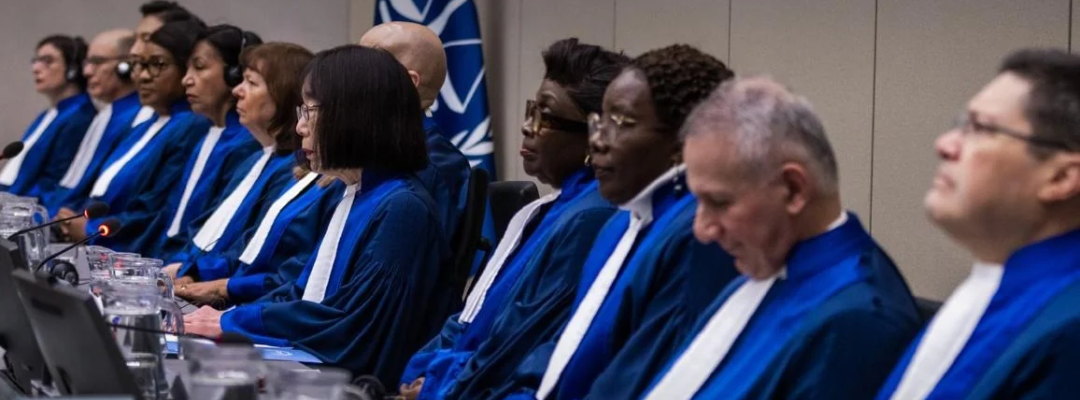
In October, the European Parliament President Roberta Metsola announced this year’s Sakharov Prize for Freedom of Thought would go collectively to the International Criminal Court (ICC) and its officials. Metsola commented on this: ‘The European Union is built on respect for multilateralism and international institutions.’
The timing of this was no accident. Early this year, the United States of America had sanctioned the court, which is the current climax of a campaign against the judges and prosecutors that began in February 2025. ICC President Tomoko Akane said the ‘unprecedented challenges’ facing the court made the honour even more significant. To see why, it helps to start with the man the prize is named after.
A prize born from dissent
Andrei Sakharov (1921–1989) was a Soviet nuclear physicist who helped build the USSR’s hydrogen bomb, then became one of its fiercest critics. He won the Nobel Peace Prize in 1975 for his human rights work, but because he was banned from travelling, his wife Yelena Bonner accepted it for him. In 1980, he was banished to the closed city of Gorky.
The European Parliament followed his work closely. In 1985, with Sakharov’s consent, the Parliament voted to create a prize in his name. The first awards in 1988 went to Nelson Mandela, who was still in prison, and posthumously to the Soviet dissident Anatoli Marchenko.
Today the 50,000€ prize is the EU’s highest tribute to human rights work. Several laureates, including Malala Yousafzai, Denis Mukwege and Nadia Murad, later won the Nobel Peace Prize. However, honouring an institution is rare; the closest precedent was when Kofi Annan and all the UN staff were recognised in 2003.
The ICC
The ICC started its work in 2002 under the Rome Statute in The Hague. It is the world’s first permanent international criminal court, prosecuting individuals for genocide, war crimes, crimes against humanity and aggression. The court only steps in when national courts cannot or will not act. The USA, Russia, China and Israel are not members.
Its docket reads like a map of today’s global conflicts. In 2023, ICC judges issued an arrest warrant for Vladimir Putin over the deportation of Ukrainian children. In November 2024, they issued warrants for Israeli Prime Minister Benjamin Netanyahu and former defence minister Yoav Gallant over the war in Gaza, alongside one for the Hamas commander Mohammed Deif. In 2025, they sought the Taliban leader for persecuting women and girls. And at the end of November 2026, former Philippine president Rodrigo Duterte is due to go on trial for crimes against humanity linked to his ‘war on drugs’.
Sanctioned for doing their jobs
Washington has long opposed the court, but after the Netanyahu warrants, the pressure from the Trump administration escalated sharply. In February 2025, an executive order authorised sanctions, and then chief prosecutor Karim Khan was targeted first, followed by judges and both deputy prosecutors throughout the year. In August 2026, the USA sanctioned President Akane herself. The Trump administration calls the ICC ‘corrupt and fatally politicised’. On 9 October 2026, within hours after the Nobel Peace Prize went to former ICC judge Navi Pillay, the USA sanctioned the court as an institution.
Sanctioned officials are barred from the USA, and their assets there are frozen. This might not sound bad, but because global banks depend on the US financial system, companies far beyond the USA refuse to deal with them, and transactions have been rejected. Akane has warned that sanctioning the court could leave it ‘as good as dead ’.
Why this prize matters
Honouring a court under attack is a political statement that the European Parliament and its members did not hide. They voiced deep concern at the sanctions and urged the European Commission to activate the EU’s blocking statute, a law designed to shield Europeans from the reach of foreign sanctions. While the prize lifts no sanctions, it’s a symbolic act that the European Parliament stands behind the ICC. What counts is whether EU governments follow through.
This year’s choice echoes Sakharov’s own story. He was punished by a superpower for insisting that power must answer to law. Today, ICC judges and prosecutors are being penalised for applying the law to the powerful.
International justice is one of the few tools that can hold leaders accountable when their own courts fail, from Ukraine and Gaza to Afghanistan and the Philippines. If a court and its officials can be cut off from their bank accounts, the lesson for future perpetrators is that pressure works. When the prize is handed over in Strasbourg this December, Europe says it intends to stand behind the rules it helped to write.
