


By Beatriz Santos Mayo
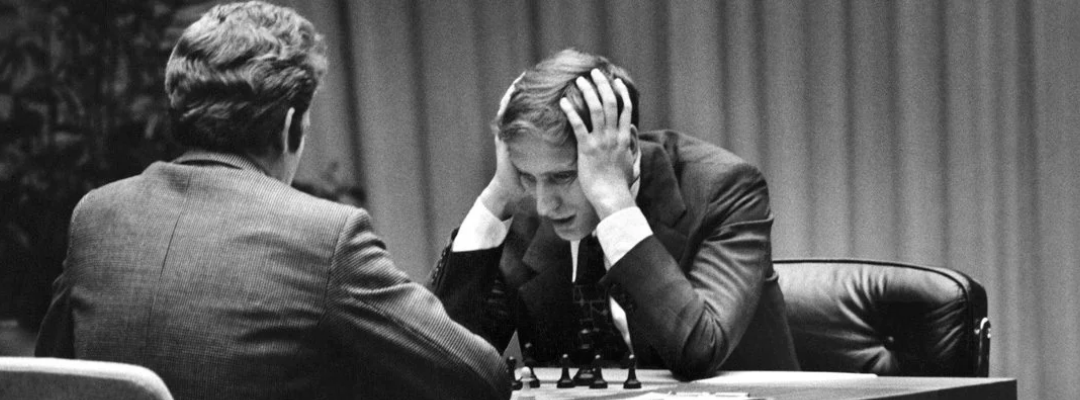
When Bobby Fischer defeated Boris Spassky at the 1972 World Chess Championship in Reykjavík, his victory ended more than two decades of Soviet dominance. It is also said that it gave the United States a symbolic victory in the Cold War.
Both countries had attached political significance to the match, turning the competition between two players into a test of national prestige.
The US national security adviser, Henry Kissinger, had personally encouraged Fischer to compete. ‘America wants you to go over there and beat the Russians’, he reportedly told him. For the Soviet Union, whose state-supported chess system had produced successive world champions, the defeat challenged the use of sporting success as evidence of communist superiority.
More than fifty years later, chess remains a source of international influence. Governments can use players´achivements to build their reputations, while the leadership of the International Chess Federation (FIDE) offers influence over the game itself.
A Nation on the Board
Chess developed from an earlier game in India around the sixth century. Its pieces represented different parts of an army. Warfare was built into the board long before governments began using tournament results to make political points.
However, the Soviet Union gave chess a particularly prominent role, supporting clubs, training, and competitions. The USSR aimed to create a system that produced generations of leading players who would represent the country internationally, presenting their victories as evidence of the intellectual strength of Soviet society and, by extension, the success of its political system. Mikhail Botvinnik, who became world champion in 1948, was both a beneficiary of this system and a committed communist. His success helped the state present chess victories as evidence of what Soviet education and support could achieve.
Soviet players then held the world title continuously until 1972. By the time Fischer challenged Spassky, he was competing against the dominance that Moscow had made part of its international image.
The use of chess can be understood as a form of soft power, through which a country builds its reputation and influence by drawing attention to its cultural or intellectual achievements. However, the players whose achievements contribute to that reputation do not necessarily support the policies of their governments, and their visibility can also give them a platform from which to challenge the state. For example, former world champion Garry Kasparov used his international profile to become an outspoken critic of Vladimir Putin. Iranian player Sara Khadem competed without a headscarf in December 2022, amid protests against compulsory hijab rules, before moving to Spain and gaining Spanish citizenship in July 2023.
Influence Beyond the Players
Chess politics also reaches the organisations running the game. FIDE oversees world championships, supports national federations, and promotes chess internationally. It also chooses where the tournaments take place and who receives funding, giving it influence beyond the board.
For more than three decades, FIDE was led by Russian figures, beginning with Kirsan Ilyumzhinov, who became president in 1995 and remained in office until 2018. Also the leader of the Russian republic of Kalmykia for much of that period, Ilyumzhinov used his personal wealth to support the federation, but his presidency attracted allegations of corruption and scrutiny of his political relationships, including his contacts with the governments of Iraq and Syria.
The United States sanctioned Ilyumzhinov in 2015 over his dealings with the Syrian government, and in 2018 the Swiss bank UBS closed FIDE’s accounts, bringing the financial risks surrounding its leadership into sharper focus. His successor, Arkady Dvorkovich, was a former Russian deputy prime minister, whose supporters credited him with improving the federation’s administration and finances, although his previous government role and Russian corporate sponsorship continued to raise questions about its independence.
The concern was therefore not simply the nationality of FIDE’s president, but whether the organisation could make independent decisions while relying on financial and political networks connected to one country.
Neutrality Under Pressure
After Russia´s full-scale invasion of Ukraine in 2022, FIDE condemned the invasion, stopped awarding official competitions to Russia and Belarus, and ended sponsorship agreements with Russian and Belarusian companies. The players from both countries now compete individually under the FIDE flag. Some Ukrainian grandmasters called for stronger restrictions, arguing that continued Russian participation was difficult to justify when the war prevented Ukrainian players from taking part on comparable terms.
In September 2026, Timur Turlov, a Moscow-born businessman who became a Kazakh citizen in 2022, succeeded Dvorkovich as FIDE president, ending more than thirty years of Russian presidents without necessarily resolving the debate about financial influence. As DW reported during the election campaign, Turlov’s company, Freedom Holding Corp., was already a major FIDE sponsor, raising questions about potential conflicts of interest when a financial backer also takes responsibility for the organisation receiving its support.
Limits of the Chessboard
Chess offers a familiar language for politics, but the comparison has limits. Countries are not pawns, leaders cannot see every move, and political victories rarely settle matters for good.
Chess can bring people together across borders, but the independence of the institutions governing it depends on transparent funding and accountable leadership, rather than on the assumption that sport stands outside politics.
