

From Poland-Lithuania to Brussels: The Dangers of Political Veto Power
Opinion by Jokin de Carlos-Sola
Despite being an obsessive history buff, I have never been the biggest fan of historical analogies. Mostly because while history can teach us a lot, it can also misguide us. For instance, many Americans like to see themselves as a modern Roman Empire. They go around listing the different reasons that could cause the downfall of America, but that is like comparing a Walmart to a Cathedral; sure, both are big, but that’s it.
We also see this when some fear that the EU might be a modern Weimar Republic, polarised and unstable. However, Weimar was built on top of the structures of the German Empire, so when the Nazis took over power, they used those structures to create the Third Reich.
By making these comparisons, we ignore the factors that led to those original cases. We also risk ignoring more urgent threats simply because they do not fit a popular historical analogy. History can be useful, but not in the way we often assume.
That said, I would like to take this opportunity to make a historical analogy, but keep in mind what I just mentioned earlier. I want to talk about two words in Latin that in the 18th century led to the destruction of the biggest state in Europe: Liberum Veto and Sisto Activitatem.
The Story of the Polish-Lithuanian Commonwealth
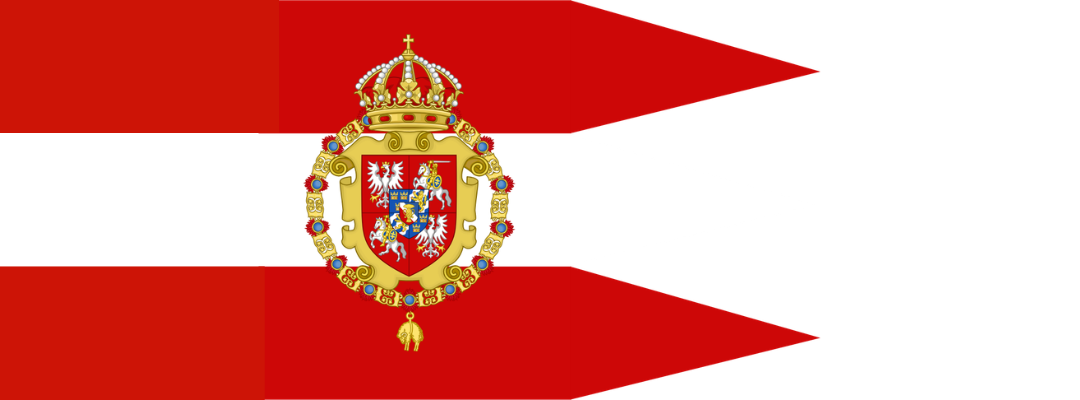
In the 17th century, the Polish-Lithuanian Commonwealth was the biggest state in Europe. Formed through the union between the Kingdom of Poland and the Grand Duchy of Lithuania, it was a parliamentary republic where kings were elected by a parliament of nobles called the Sejm. It also had religious tolerance for all faiths, which was uncommon at the time. There were trade and cultural hubs like in any other in Northern and Eastern Europe, such as Krakow, Warsaw, Lviv and Danzig. On top of that, it possessed the rich lands of Western Ukraine, which were the breadbasket of Europe.
This massive state, covering much of today’s Poland, Belarus, Lithuania and Ukraine, was also a strong military power. Between 1610 and 1612, it became the first European state to take over and occupy Moscow, making Russia briefly its protectorate. In 1658, it freed itself from a Swedish occupation that had killed a third of its population, and in 1683, it relieved Vienna from the Ottomans. This was a strong state, even if only the nobility, or szlachta, could participate in politics.
However, by 1721, it had turned into a weak Russian puppet. By 1772, it had been split between Austria, Russia and Prussia; and by 1795, it no longer existed.
The downfall of the Polish-Lithuanian Commonwealth was structural. One of the biggest weaknesses of this state was the so-called Liberum Veto, or free veto in Latin. This provision allowed any member of the Parliament to simply end a session by yelling ‘Sisto Activitatem’ (end all activities), effectively bringing all parliamentary activity to a halt. This was meant to ensure that all decisions were made with full consensus and complete unanimity, preventing the power from becoming fully centralised. While this mechanism had existed from the beginning of the state’s formation, it had been rarely used until the 18th century.
In 1717, after another major Swedish occupation and a Polish civil war, Russia intervened directly. Tsar Peter the Great realised then that the Liberum Veto could be used to turn Poland into a Russian protectorate. In that year, he brought the two factions of the Sejm together to vote on an agreement that aimed to end the civil war. This agreement, designed by him, reduced the size of the Polish army, weakened the power of the central government, and made the Liberum Veto a crucial point that no king could bypass. Then Tsar Peter surrounded the building with his army to prevent the veto from being used against it. After this ‘Silent Sejm’, as it was called, Poland was left with a very weak central authority and an army of just 30,000 men, while Russia had over 300,000. To top it all off, Russia was now the guarantor of the stability of the country. Whenever a Polish king or Minister attempted to make reforms, Russia would always have some group of bribed Polish nobles ready to yell ‘Sisto Activitatem’, stopping any attempts to change the system.
With this new status quo, Poland was no longer a fully sovereign state but a dysfunctional bureaucratic mess under the control of Russia, where just one noble needed to be on Russia’s side for everything to crumble. If someone tried to solve this, then with the help of pro-Moscow nobles, the Russian army would appear and restore the system. As time passed, these divisions became inescapable, and Russia would use Poland-Lithuania’s territory as a bargaining chip with its neighbours, the Prussians and the Austrians.
This led to the partitions of 1772, 1793 and 1795. The last two occurred after the French Revolution, whenKing Stanisław Poniatowski, together with the Sejm, created the Polish Constitution in 1791, effectively challenging absolutism. Russia under Catherine the Great could not allow this because if Poland became a constitutional monarchy, her own role as an absolutist monarch might be put into question by its citizens. Together with members of the Polish nobility who did not wish for a constitutional Poland, the Russians, Austrians and Prussians destroyed the country.
Since then, the partitions of Poland have often been presented as a case of aggression and external invasion by foreign forces. But as we have seen, on top of conspiring neighbours, there were two other factors: an overly complicated system that could be easily blocked, and people within that system who were too eager to exploit it. It is important to consider that many of the nobles who blocked this system were not necessarily interested in Russian, Austrian or even Prussian annexation from the beginning. For the most part, they were opportunistic men with an overly short-term vision who were played by much bigger actors with much grander ambitions.
The EU and Unanimity
Now, back to today.
As I said at the beginning, historical analogies should be used with care. However, we can let history teach us which structural mistakes led to disasters. Right now, it seems that the EU is facing an issue with its own Liberum Veto, with member states effectively calling Sisto Activitatem, whether for their own personal interests or for the interests of foreign powers.
In this example, it would be easy to point to Viktor Orbán as the main culprit. He has certainly tried to block the EU on issues such as Ukraine, security, and immigration. This blocking has been done to leverage concessions rather than because of coherent alternative strategies. Andhe has not been the only one. More recently, Belgian Prime Minister Bart De Wever has become notorious in Brussels for blocking the use of Russian funds to help Ukraine, directly hindering the wider EU strategy.
Recent White House statements and leaked memos suggest a willingness to weaken European cohesion. There is a real possibility that parts of the American administration may view Europe less as a partner and more as a bargaining chip in negotiations with powers such as Russia and China. What is most concerning is how this has not seriously shaken European politics or media. The case of Poland shows that hostility does not just come from strategic opportunism but from political differences. Once Poland embraced constitutionalism, it had to be destroyed. Similarly, the MAGA movement considers the EU an ideological enemy and will try to undermine it for that reason. Still, there appears to be limited capacity for Washington to reshape European party politics, though this could change in 2026 if political boundaries continue to be tested. The only visible exception so far has been the Nordic countries, whose political class, from left to right, has positioned itself more critically toward Trumpism and MAGA objectives in Europe, marking a shift from decades of uncritical Atlanticism.
We must not forget that neither Trump nor Putin is Peter the Great, as much as they wish they were. However, the EU is clearly finding itself trapped by the short-term interests of a few member states. Originally, this was not supposed to be an issue when the European Economic Community was created. But Charles de Gaulle, in his standoff with Commission President Walter Hallstein in the 1960s, established the ‘Empty Chair’ doctrine, allowing a country to block legislation deemed nationally important.
Too many leaders have taken advantage of this possibility, as domestic weakness drives them to seek foreign policy victories to strengthen their position. This is a key consequence of the lack of a common European strategy. Anti-federalists have argued that without a common centralised doctrine, EU member states can compete and achieve excellence. Yet, reality seems to show that competing interests instead lead to member states sabotaging one another and creating a chain of grievances that reappear at every summit.
Mario Draghi has made it clear that unanimity must end for a stronger Union to exist, as it has become a new Liberum Veto. Leaders like Macron and Merz seem supportive of this idea. However, for that to happen, they must accept that there will be moments with no Empty Chair or ‘Sisto Activitatem’.
Poland-Lithuania also had its own Draghi moments, when figures such as Father Stanisław Konarski or the House of Czartoryski called for the end of the Liberum Veto. Still, their attempts fell on deaf ears, and the Commonwealth gradually fell further into Russian hands. Draghi cannot fall on deaf ears. Whether Union or Commonwealth, a lack of vision and common strategy leads actors to block one another, and outside forces can exploit this. It will be important for Europeans, both citizens and leaders, to recognise this risk and choose to strengthen their democracy before they are forced to accept authoritarianism.
