

Bobby Sands, Brexit, and the Slow Fracture of Britain

By Marco Dore
On the 5th of May 2026, a large group of people gathered in front of a statue in Twinbrook, Belfast. Among them were community members, politicians, and activists, all standing in front of the statue of a young man brandishing an Irish flag, who died after 66 days of hunger strike: his name is Bobby Sands.
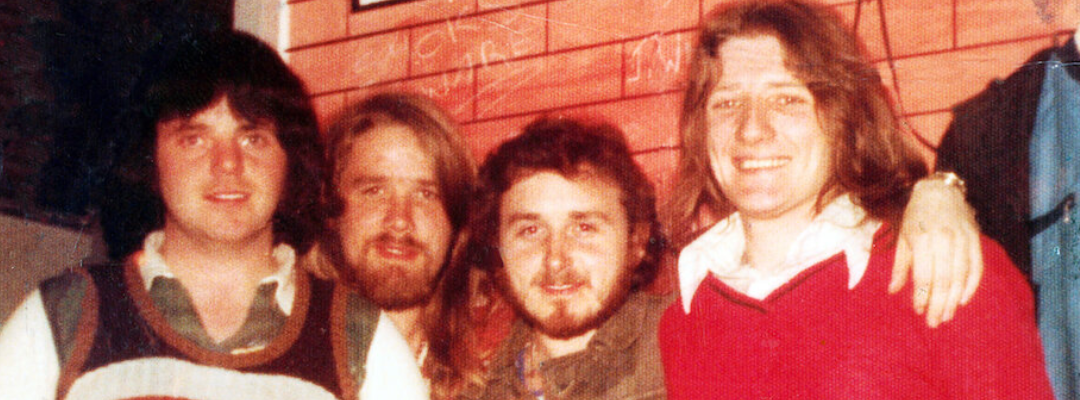
Born in Dunmurry in 1954 to a Catholic family in the territory of Northern Ireland, Bobby Sands joined the ranks of the Provisional Irish Republican Army (PIRA) during the height of 'the Troubles' in Northern Ireland. The infamous period of communal violence between Protestants and Catholics weighed heavily on the young Sands, becoming at different points in life a victim of discrimination, attacks, and beatings solely for being a Catholic in the wrong part of town. In 1976, Sands was arrested for the second time for arms possession and links to the IRA, and was sentenced to 14 years of prison. UK Prime Minister Margaret Thatcher deprived him and all other nationalist militants of the status of political prisoners. The callousness of Thatcher towards political prisoners in Ireland prompted Bobby and several other Irish nationalist militants to go on a hunger strike. After 66 days, Bobby Sands died of starvation. However, his sacrifice became an important step towards the Good Friday Agreement and the institutionalisation of Sinn Féin as a strong political party advocating for Irish unity both in Westminster and in Dublin.
From armed struggle to a peaceful transition
Today, Sinn Féin is one of the largest parties in the Irish Dáil, and has recently polled the highest among the Irish electorate. Meanwhile, in Northern Ireland, the party is mandated to share power with the Protestant Democratic Unionist Party, ensuring representation of both Catholics and Protestants in the Northern Irish political system.
Here lies one of the most troublesome issues of Northern Ireland: the two parties frequently find themselves divided on issues, from service delivery to language and relations with both Dublin and London. This power-sharing agreement often leads to deadlock or shutdown of the government. Since 1998, the Northern Irish government has had 5,057 days of operation and 3,167 days of suspension, plus a further 154 days of boycotts, leaving it unable to function. The Executive is effectively shut down for 39.6% of its entire existence.
This staggering amount of inactivity naturally brought widespread public discontent, with lacking services, such as extremely long healthcare waiting lists, and a failure to bridge differences between Catholic and Protestant factions. After Brexit, these issues only worsened, with long and heated debates regarding the border between Northern Ireland and the Republic, pouring fuel on a conflict that has been stalled, but never resolved. There are still various armed paramilitary groups in Northern Ireland, with varying degrees of military capability, split between Irish Nationalist and British Unionist sections of society. These armed groups have not all fully ceased operations and are involved in either violence or crime, rendering the Good Friday Agreement a fragile outline for peace in the territory.
According to the Northern Irish Police, since 1998, there have been a total of 3,260 paramilitary attacks in the territory, with 1,369 of them being shootings. Out of these, unionists were responsible for 2,064 and nationalists for 1,196. These figures amount to an average of 130 paramilitary attacks per year. A territory that is formally considered to be at peace is still dealing with paramilitary violence, intimidation, beatings, and homicides. Furthermore, violence has often escalated over contentious political issues, paving the way for a resurgence of hostilities between Catholic and Protestant communities. Especially with the emergence of Brexit, the peace accords of 1998 seem to be more fragile than ever.
Despite 'the Troubles' having officially ended, and the paramilitary groups having lost most of their military capacity in terms of weaponry compared to pre-1998 times, communal violence has seen a resurgence. The loss of strength of paramilitary factions has paved the way for a different, less organised, and informal type of violence, which has the potential to severely harm the people of Northern Ireland. In particular, in 2021, a riot erupted following the Northern Ireland Brexit Accords, with unionists taking over the streets, resulting in the injury of 88 PSNI officers, and with people as young as 13 taking part in the violence. This event prompted the emergence of the Loyalist Communities Council, an umbrella organisation giving political representation to several loyalist paramilitary groups, officially withdrawing its support for the Good Friday Agreement.
This instance shows how much the conflict remains present in Northern Irish society and is connected to broader issues in the UK and Europe. Before Brexit, both Ireland and the UK shared EU membership and an invisible border thanks to the Common Travel Agreement, premises that the Good Friday Agreement was built on. As of today, having the UK rejoin the EU is more than desirable, seeing the stabilising effect of EU participation by both countries and the freedom of movement for goods and people it entails.
From Northern Ireland to Scotland and Wales
However, this prospect becomes less feasible by the day. On the 7th of May, regional elections took place in the UK, with sharp fractures that saw the victory of Scottish and Welsh nationalist parties, while England saw a resurgence of the far-right anti-devolution party 'Reform UK', spearheaded by Nigel Farage. The Northern Irish dispute inserts itself in the wider instability that resulted from these elections. Plaid Cymru secured the most seats in the national parliament, gaining 35% of the vote share, while in Scotland, the SNP gathered the favour of 38.2% of the electorate, and Reform UK is expected to win the most local seats in England. This shows a clear cleavage between nationalist movements in the other constituent nations of the UK, badly affected by the results of Brexit, and an ever more nationalistic England, trying to hold on to the rest of the kingdom.
A growing dissatisfaction towards traditional Westminster parties is growing across the UK and their failure to handle the natural consequences of Brexit. Nationalist movements, except for Reform UK, are advocating for EU membership and building a Celtic bloc against Brexit Britain. Plaid Cymru, the Scottish National Party, and Sinn Féin have been strong advocates for EU membership, gathering support not only based on linguistic rights of national minorities, but also to join the wider European family, and abandoning the imperial myths of the UK that voted in favour of Brexit and holding onto the Commonwealth as an alternative.
The EU has been a welcoming home for states that have been denied sovereignty, whose languages had to be revitalised, and which for centuries had to struggle against great powers to gain self-determination. The Baltics, the Western Balkans, and much of the former communist bloc on the other side of the Iron Curtain; all these countries took refuge in the European project, contributing to its development, and were defended from imperial domination. If the EU could expand its perspectives after the fall of the Berlin Wall, it could also expand its vision towards nationalities in the UK that are facing an increasingly polarised Britain, which seems ever less friendly towards its devolved entities.
