

6. Champion inclusion, advance gender equality, racial justice and LGBTIQ rights
What we stand for: A just society built on equity, diversity, and inclusion is essential to preserving a healthy democracy.
In recent years, Europe has experienced a rise in anti-rights movements, undermining the foundations of democracy and its social market economy principles. Systems of oppression and unequal power structures, such as patriarchy, racism, and capitalism, must be addressed in order to preserve democracy and build a society that leaves no one behind.
Women and other marginalised groups, such as LGBTIQ people, racialised communities, and religious minorities – particularly those facing multiple and intersecting forms of discrimination – continue to experience alarming levels of hate-motivated violence.
More than 2.300 women fall victim to gender-motivated crime in Europe every year, while half of European women have experienced some form of sexual harassment since the age of 15. Activists and civil society actors working in the fields of human rights, gender equality, and sexual and reproductive health and rights (SRHR) have reported increasing challenges and threats, including violent attacks, judicial and administrative harassment, and online and offline smear campaigns and intimidation - particularly when responding to attempts to introduce regressive legislation in various countries.
A survey led by the European Union Agency for Fundamental Rights shows that half of Muslims living in the EU and 45% of EU citizens of African descent experienced discrimination on any ground within the past five years, with many harassment instances remaining unreported.
Similarly, over half (55%) of members of the LGBTI community reported being victims of hate-motivated harassment in the previous year, with the figure rising to 69% and 77% for trans and intersex participants, respectively. These forms of harassment and violence often occur in spaces that should be considered ‘safe’, such as at home, in public, at school, in the workplace, or online.

Foundations for action plans have been laid by the institutions. The EU Anti-racism Action Plan for 2020-2025, LGBTIQ Equality Strategy for 2020-2025, and Gender Equality Strategy for 2020-2025 must be continued and enhanced beyond 2025, while the commitments of the EU Roadmap for Women’s Rights must be translated into policies. Importantly, implementation mechanisms for these action plans must be reinforced at local, national, and European levels to ensure they function as intended.
Equitable representation also remains a significant challenge. Gender parity, although a stated priority of the European institutions, is far from being achieved across Europe. The representation of women in national decision-making bodies varies from 49% in Sweden to 14% in Hungary. The makeup of European institutions is also hardly reflective of the populations they represent. Only 37 of the 720 lawmakers come from an ethnically diverse background.
EU&U believes that the strength of the European project grows when all citizens, regardless of their identities, feel heard and protected by its institutions. By championing an intersectional approach to governance, rooted in close collaboration with European and grassroots civil society organisations, European institutions can ensure that all voices, including those of young people, are integrated into the legislative process, and that decisions reflect the lived experiences of everyone.
Restricting or outright banning abortions does not reduce their number – it only makes them more dangerous. The World Health Organization (WHO) estimates that nearly half of all abortions globally (45%) are unsafe, with many carried out by untrained individuals using hazardous methods. These unsafe procedures are a major cause of maternal deaths worldwide, claiming the lives of around 29,000 women and girls each year, according to Médecins Sans Frontières. As outlined in a United Nations report on the state of reproductive rights in Poland, the imposition of motherhood can also prevent women from continuing their education, pursuing their careers, and achieving financial independence.
EU&U firmly believes that access to safe and legal abortion is a fundamental human right. EU&U calls on the European Union and its Member States to ensure access to free, safe, and legal abortion for women and all persons who can become pregnant, in line with WHO standards, and to actively defend reproductive rights as a core element of human rights policy. We are not alone in making this call – in 2025, over 1.2 million European citizens expressed their support for making abortions safe and accessible across Europe.
The non-negotiable right to bodily autonomy and abortion
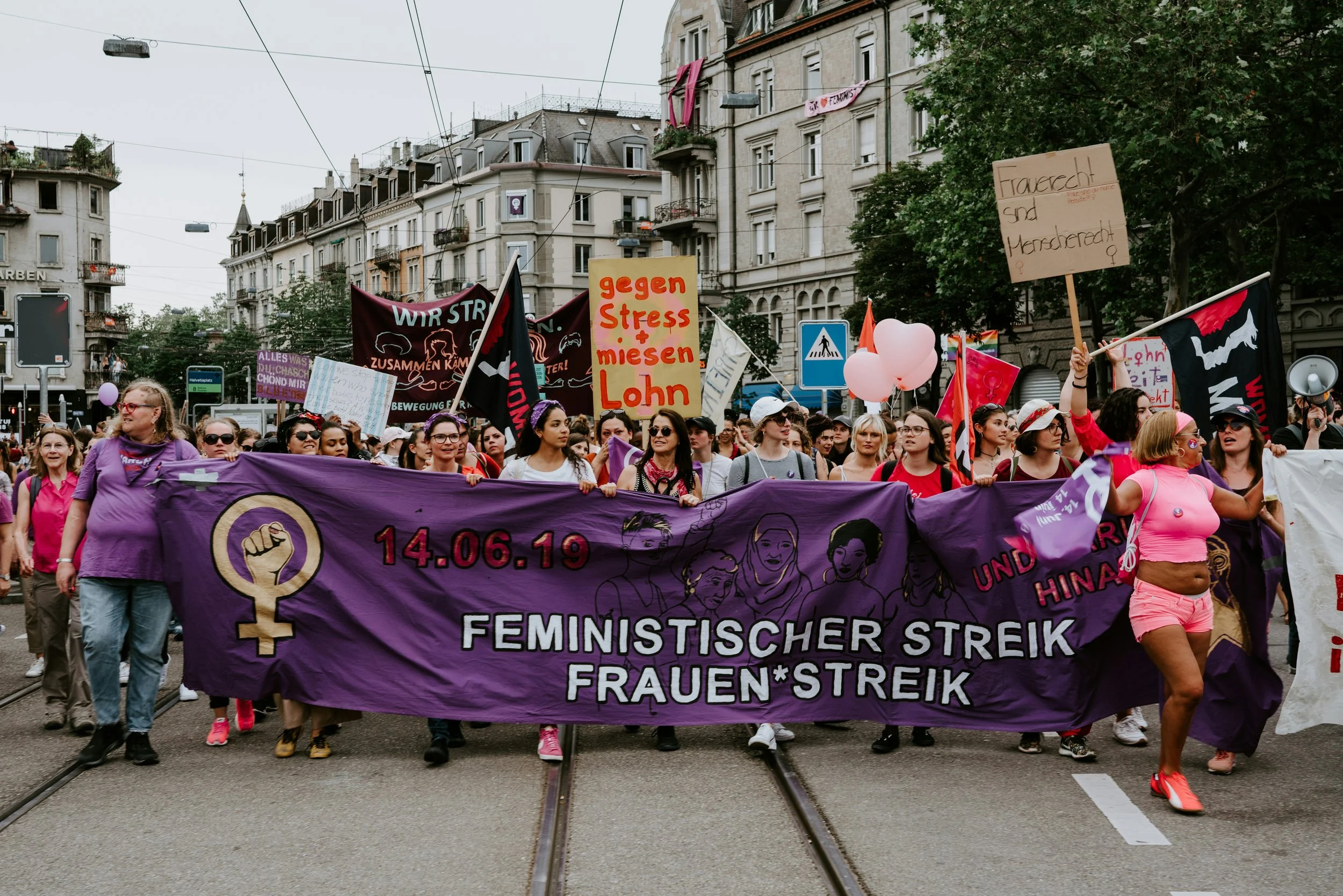
Abortion rights and SRHR: Recognise sexual and reproductive health and rights, including access to free, safe, and legal abortion, as part of fundamental healthcare, in accordance with the European Parliament resolution on including the right to abortion in the EU Fundamental Rights Charter, and ensuring maternal and gynecological healthcare, including abortion services, are guaranteed and easily accessible at the local level and healthcare staff are adequately trained to perform them.
Contraceptive access and innovation: Guarantee universal access to a full range of free, safe, accessible, and high-quality contraceptives and abortion medication, including emergency contraception, with targeted support for marginalised groups such as migrant women and women with disabilities. Ensure protection against all forms of obstetric violence, fund research into safer contraceptive options for women and new male contraceptives, and promote comprehensive sexual education (age-appropriate, evidence-based, and non-discriminatory) to ensure shared responsibility in reproductive health and to advance gender equality in healthcare innovation.
Monitor and enforce SRHR: The EU should strengthen the monitoring and enforcement of sexual and reproductive health and rights (SRHR) by integrating them into the Rule of Law Mechanism, with specific attention to abortion and contraception access, sexuality education, non-discrimination, and civic advocacy space. The European Institute for Gender Equality (EIGE) should include SRHR indicators in the Gender Equality Index for transparent comparisons, while the Fundamental Rights Agency should investigate systemic discrimination through an intersectional lens. Mechanisms must be established to collect data on cross-border SRHR access, and joint regional research between EU and non-EU countries should be supported to inform policies and funding.
Strengthen equality leadership in the EU: Appoint an EU Commissioner with a strong and clear mandate for Equality and Fundamental Rights, and establish a dedicated Directorate-General to lead and coordinate equality, non-discrimination, and anti-racism efforts across all EU policies, revising and strengthening European and national strategies.
Embed intersectionality in EU policy: Apply an intersectional, rights-based approach across all EU legislation and strategies, including introducing diversity and inclusion training for elected officials and staff, implementing voluntary diversity data collection within EU institutions, and supporting harmonised Diversity, Equity, and Inclusion strategies to increase representation at all levels.
Protect the fundamental rights of disadvantaged groups: Safeguard the rights of LGBTIQ people and other disadvantaged groups by defending minority-led organisations from discrimination in access to funding, introducing strong safeguards against lawsuits, and rejecting laws that falsely label their visibility as ‘propaganda’, ensuring that freedom of expression and assembly are protected throughout Europe.
End Violence Against Women (VAW):
Ensure the transposition and implementation of the EU Directive 2024/1385 on combating violence against women and domestic violence by all EU Member States, further improve and extend the provisions of the Directive by including a harmonised definition of rape based on the lack of voluntarily given consent, in accordance with article 36 of the Istanbul Convention;
Urge all EU member states to ratify and fully implement the Istanbul Convention without reservations, recognising online and offline violence against women and girls, female genital mutilation, forced marriage, forced abortion and forced sterilisation as a systemic human rights violation, and ensure tailored support services for all victims, including women with disabilities, migrant women, racialised women, women living in rural areas, and women affected by homelessness;
Guarantee the adoption of pre-emptive measures for the promotion of autonomy, respect, consent and gender equality values, such as comprehensive relationship and sexuality education in school curricula and non-formal education;
Urge EU member states to ratify and implement the ILO’s Convention concerning the elimination of violence and harassment in the world of work (No. 190).
Women in leadership: Accelerate the full implementation of the Women on Board Directive to achieve gender balance in decision-making roles within the private sector, and adopt binding legislation to enforce 50/50 gender parity in all EU political decision-making bodies, including top EU positions.

‘One of the biggest internal threats to the stability of Europe in the face of multiple crises is the rise in inequality, and our attention should focus on where several layers of discrimination overlap: migrant girls, boys in poor areas growing up without parental care, and women who are victims of domestic violence but also of structural or state-endorsed abuse.
Building respect and healthy relationships at home, in schools and workplaces, and in local communities is crucial to preserving the stability of the European social fabric. Defending democracy is defending personal freedoms and requires strong youth and civil society participation.’
Camelia Proca, Founder and Director, Asociația pentru Libertate și Egalitate de Gen (ALEG)

‘Europe’s promise of equality is under siege, not by religious extremists on the fringes, but by those in power who weaponise hate to dismantle democracy itself. Defending the rights of LGBTIQ people is not a cultural debate; it’s a democratic necessity. Our generation must rise to protect the freedom to be, to love, and to live without fear. Europe’s future depends on it.’
Rémy Bonny, Executive Director, Forbidden Colours
Inclusive healthcare for LGBTIQ people: Ensure the full inclusion of LGBTIQ people in healthcare systems by collecting data on discrimination and violence in healthcare settings, training medical professionals and students to provide respectful, relevant, and non-discriminatory care, and actively working to eliminate stigma that prevents LGBTIQ individuals from accessing timely medical services.
Safeguard the dignity and rights of LGBTIQ people: Strengthen legal and non-legal measures to combat violence and discrimination based on sexual orientation, gender identity and expression, and sex characteristics. This includes prohibiting bias-motivated speech and violence both online and offline, protecting intersex individuals from genital mutilation, forced sterilisation, and medicalisation, and ensuring LGBTIQ people of all ages are free from discrimination in education, healthcare, housing, and social protection through effective monitoring and enforcement systems.
Ensure family rights and freedom of movement for LGBTIQ people: Guarantee the recognition and protection of LGBTIQ people’s family rights across the EU by ensuring freedom of movement and residence for LGBTIQ families, securing equal access to assisted reproductive treatments, parental leave, and adoption rights regardless of sexual orientation, gender identity, or family structure.

Advance racial justice through recognition, accountability, and transformation: Confront and dismantle the legacies of enslavement, colonisation, and other historical systems of oppression that underpin structural racism in Europe today. This requires going beyond symbolic remembrance to ensure meaningful reparations, including financial compensation, restitution of stolen land and cultural heritage, institutional reforms, and public acknowledgement of these crimes. It means embedding the histories of racial, ethnic, and religious minorities – and the realities of Europe’s role in slavery and colonial exploitation – into both formal and non-formal education. Achieving true racial justice demands that racialised communities are not only consulted but hold real decision-making power in policy-making, with their lived experiences and needs at the centre of all EU governance, legislation, and resource allocation.
Protect the rights of people on the move: Ensure that the EU adopts an explicitly antiracist, human rights-centred, and mobility-friendly approach to migration. This requires ending policies that treat migration as a security threat or view migrants through prejudice, and instead focusing on protection, inclusion, and human dignity. The EU must prohibit and sanction discrimination and violence in migration governance and law enforcement, expand safe and legal pathways, and redirect resources away from border militarisation and criminalisation toward community-based support and the safety of all people on the move. In light of the New Pact on Migration, the reform of the Schengen Borders Code, and the Returns Regulation, which reinforce a security-first mindset, such a shift is essential to uphold Europe’s legal and moral obligations to protect everyone’s rights and dignity, regardless of status.
Advance the rights and inclusion of persons with disabilities: Support EU Member States in aligning disability assessment methodologies with the Convention on the Rights of Persons with Disabilities (CRPD) to guarantee equal access to social protection, independent living, and support services. Establish a Disability Employment and Skills Guarantee to ensure inclusive access to education, training, employment, and entrepreneurship. Promote quality inclusive education with personalised support and accessible online learning for all learners with disabilities, and adopt EU-wide health initiatives to ensure equal access to the highest standards of healthcare for persons with disabilities across all Member States.
Enhance accessibility across the EU: Establish a European agency for accessibility to oversee implementation of harmonised accessibility laws, expand and harmonise accessibility standards in transport infrastructure, invest in accessible communication tools such as national sign languages and Braille, and ensure essential services – including health, education, transport, and communications – remain fully accessible to persons with disabilities, even during emergencies and crises.
Protect the rights and dignity of persons with disabilities: Launch Europe-wide awareness campaigns to combat stereotypes and promote a human rights approach. Conduct a large-scale survey on violence against persons with disabilities, focusing on vulnerable groups, criminalise forced sterilisation under EU law, implement targeted measures for those at higher risk of exclusion, and develop a comprehensive European Deinstitutionalisation Strategy to end segregation of persons with disabilities, including children.